Shopping Cart (0)
Close


Seeing your dog losing hair can be worrying. The good news is that not all hair loss means your dog is seriously sick. Dogs naturally shed old fur, especially during certain times of the year. However, if you notice bald patches, itchy skin, or hair falling out in large amounts, it could be a sign of alopecia in dogs or another health problem that needs attention.
In Pakistan, hot weather, dust, fleas, ticks, and poor nutrition can all affect your dog’s skin and coat. That’s why it’s important to know what normal shedding looks like and when hair loss needs treatment.
This guide explains the most common Dog Hair Loss Causes in Pakistan in simple words. You’ll learn how to spot the warning signs, understand possible causes, explore treatment options, and discover easy ways to keep your dog’s coat healthy. We’ll also explain when it’s time to visit a veterinarian, so you can help your pet feel comfortable and stay healthy.
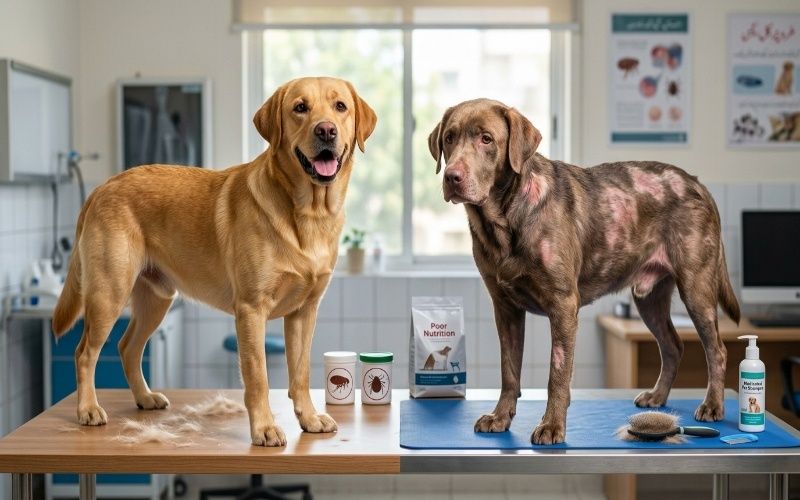
Many dog owners worry when they see fur on the floor or furniture. In most cases, some hair loss is completely normal. Dogs replace old hair with new hair throughout the year. This process is called shedding. However, there are times when hair loss is not normal. Knowing the difference can help you decide if your dog needs extra care or a visit to the veterinarian.
Normal shedding helps dogs keep a healthy coat. Most dogs shed more during spring and fall as the weather changes. In Pakistan, some dogs may also shed more during hot summer months because of the warm climate.
Some breeds naturally shed more than others. For example, Labrador Retrievers, German Shepherds, and Golden Retrievers usually leave more hair around the house than breeds with shorter or single coats.
Normal shedding has a few common signs:
This type of shedding is expected and usually does not need treatment.
On the other hand, alopecia in dogs is different from normal shedding. Alopecia simply means your dog is losing hair faster than it can grow back. This usually happens because of a health problem that needs attention.
Watch for these warning signs:
These signs are not part of normal shedding vs hair loss in dogs. They may point to allergies, parasites, skin infections, or other medical problems.
If you notice excessive shedding in dogs in Pakistan along with any of these symptoms, it’s best to have your dog checked by a veterinarian before the problem gets worse.
Good nutrition also plays a big role in coat health. Feeding the best dog food in Pakistan with high quality protein, omega 3 fatty acids, and vitamins can help support healthy skin and reduce the risk of hair loss problems over time.
If you’re asking, “Why is my dog losing hair?”, there isn’t just one answer. Hair loss can happen for many reasons. Some problems are easy to treat, while others need medical care. The best way to help your dog is to find the real cause as early as possible.
Parasites are one of the most common dog hair loss causes in Pakistan. Fleas, ticks, and mites live on your dog’s skin and feed on blood or skin cells. Their bites can make the skin very itchy.
Some dogs are allergic to flea saliva. Even a few bites can lead to flea allergy dermatitis. Your dog may scratch all day, chew its tail, or bite at its back. Over time, this can cause dog losing hair in patches, especially around the tail, neck, and lower back.
Mites can also cause mange. There are two common types. Demodectic mange often affects puppies or dogs with weak immunity. Sarcoptic mange is very itchy and can spread between dogs. Both can cause bald spots, red skin, and thick scabs.
What you can do:
You can also use the best grooming product for dog like a vet approved flea comb or medicated shampoo to keep the coat clean and reduce parasite buildup.
Skin allergies are another common reason dogs lose hair. Some dogs react to certain foods, while others are sensitive to dust, pollen, grass, or mold. In many parts of Pakistan, dust and hot weather can make this worse.
A dog with allergies often scratches its ears, paws, belly, or face. Constant scratching can damage the skin and lead to hair loss.
Common signs include:
Your veterinarian may suggest changing your dog’s diet or finding the allergy trigger before starting treatment.
Skin infections can also explain why is my dog losing hair. Ringworm is a fungal infection that creates round bald patches with dry, flaky skin. It is not caused by a worm.
Yeast and bacterial infections often happen after scratching damages the skin. These infections may cause:
Keeping your dog’s skin clean and getting early treatment can stop the infection from spreading.
A healthy coat starts with good food. Dogs need protein, healthy fats, vitamins, and minerals to grow strong hair.
If your dog eats low quality food for a long time, its coat may become dull, dry, and thin. Hair may break easily or fall out more than normal.
To support healthy skin and fur, choose food that includes:
Fresh water is also important because dry skin can get worse when a dog is dehydrated.
Some dogs lose hair because of hormone problems. These usually happen slowly and may not cause much itching.
For example, hypothyroidism can slow the body and lead to weight gain, tiredness, and a thin coat. Cushing’s disease can cause increased thirst, hunger, and hair loss on both sides of the body.
These conditions cannot be diagnosed at home. Your veterinarian may need blood tests to confirm the problem and start treatment.
Dogs can also lose hair because of stress. A bored or anxious dog may lick or chew the same area again and again. Over time, this damages the skin and coat.
This is common in dogs that stay alone for long hours or do not get enough playtime.
You can help by:
If the behavior continues, a vet check is important to rule out health issues. No matter the cause, early care always helps. With the right attention, good hygiene, and proper best grooming product for dog choices, most dogs can recover and get a healthy coat again.
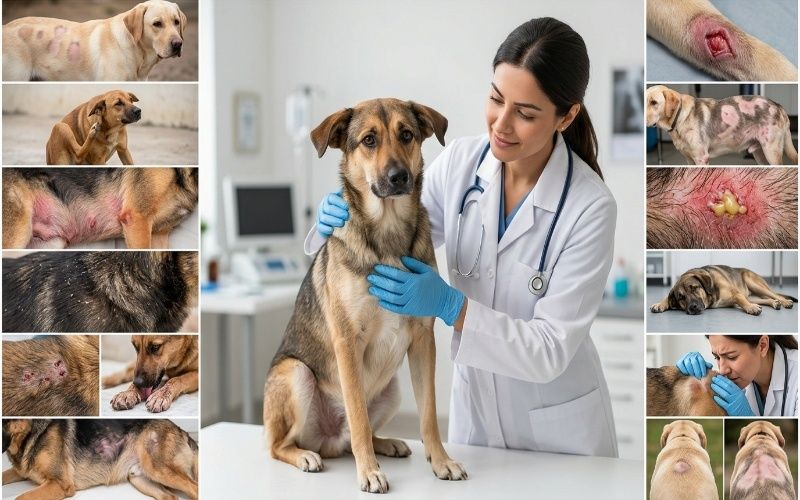
Not every case of hair loss is serious, but some signs should never be ignored. Dog hair loss symptoms often tell you that something is affecting your dog’s skin or overall health. Finding these signs early can make treatment easier and help your dog recover faster.
Hair loss can look different from one dog to another. Some dogs lose a little hair over time, while others develop bald patches within a few days. In many cases, the skin changes before the hair starts falling out.
Watch for these common symptoms:
For example, itchy skin and hair loss in dogs often happen together when fleas, allergies, or skin infections are the cause. If your dog keeps scratching the same area every day, the skin can become damaged and infected.
Some problems need professional care instead of home treatment. If you wait too long, the condition may become harder to treat.
Contact a veterinarian if your dog has:
Many dog bald spots causes are treatable, especially when they are found early. If your dog’s hair loss is getting worse or is causing discomfort, it’s best to have your pet examined. Early care can help stop the problem before it spreads and keep your dog’s skin and coat healthy.
The right dog hair loss treatment depends on what is causing the problem. That’s why it’s important not to guess or try random medicines at home. A veterinarian will first find the reason for the hair loss and then recommend the best treatment for your dog.
Many pet owners wonder how vets diagnose alopecia. The process is usually simple and starts with a full physical check. The veterinarian will look at your dog’s skin, coat, and overall health. They may also ask when the hair loss started, what your dog eats, and whether it has been scratching or licking its skin.
Depending on the symptoms, your dog may need one or more tests, such as:
These tests help find the real cause so your dog gets the right care.
Treatment is different for every dog because each cause needs a different solution.
Your veterinarian may recommend:
It’s important to follow the full treatment plan, even if your dog starts looking better after a few days.
Many owners ask, can dog hair grow back? In most cases, the answer is yes. Once the main cause is treated, new hair often begins to grow over the next few weeks or months.
Recovery depends on several factors, including the cause of the hair loss, how early treatment starts, and your dog’s overall health. Regular grooming, a balanced diet, and follow up visits with your veterinarian can also support healthy hair growth and help keep your dog’s coat in good condition.
Regular checkups are an important part of healthy dog skin care. Your veterinarian can look for early signs of parasites, allergies, or other health problems before they cause hair loss.
Keeping up with flea and tick prevention, vaccinations, and routine health visits gives your dog the best chance of having strong skin, a healthy coat, and fewer skin problems throughout the year.
If you’re looking for quality pet care products, grooming essentials, or everyday supplies, Petalicious Store can also help you keep your dog’s skin and coat in good condition as part of a regular care routine.
Understanding Dog Hair Loss Causes in Pakistan can help you take better care of your pet. While some shedding is a normal part of life, ongoing hair loss, bald patches, or itchy skin should never be ignored. Paying attention to early signs, feeding a balanced diet, grooming your dog regularly, and protecting it from fleas and ticks can make a big difference. If the problem doesn’t improve or your dog seems unwell, don’t wait to visit a veterinarian. The right dog hair loss treatment depends on the cause, and early care often leads to faster recovery. With the right daily care, your dog can enjoy a healthy dog coat and a happier, more comfortable life.
Patchy hair loss is often caused by fleas, mites, allergies, fungal infections, or skin diseases. A veterinarian can find the exact cause.
Yes. Stress or boredom can make some dogs lick or chew the same area, leading to hair loss.
Choose a balanced diet with high quality protein, omega 3 fatty acids, vitamins, and minerals. Good nutrition supports healthy skin and coat.