Shopping Cart (0)
Close


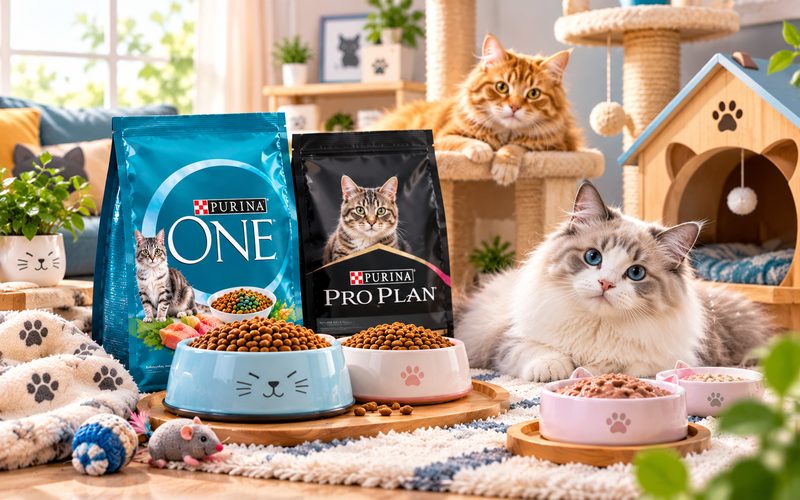
Finding the right food for your cat can be confusing, especially when there are so many formulas to choose from. Purina cat food includes options for kittens, adult cats, indoor cats, and cats with specific dietary needs. The right choice depends on your cat’s age, activity level, lifestyle, and individual needs.
When you’re choosing a product, it’s worth checking the formula, pack size, expiry date, seller, and feeding information before you buy. Availability can also vary between shops, so a formula that’s available in one place may not always be in stock elsewhere.
In this guide, you’ll learn about the main Purina ONE cat food and Purina Pro Plan ranges, along with dry and wet food options. We’ll also cover life-stage formulas, specific dietary needs, buying tips, and feeding guidance, so you can compare your options and make a more informed choice.
Purina offers several cat food ranges, and each one has its own focus. Some formulas are made for everyday feeding, while others are designed around a cat’s age, lifestyle, or specific nutritional needs. Understanding these differences can help you choose a suitable option without getting lost in a long list of products.
Purina ONE cat food includes formulas for different stages of a cat’s life and a range of common needs. There are options for kittens and adults, along with products made for concerns such as indoor living, hairball control, and sensitive digestion.
Case Study: Purina cat food can be considered for a mature cat, while a growing kitten should have a formula made for its stage of development. Always check the age range and feeding information on the pack before choosing a product.

Purina Pro Plan cat food offers a wider selection of formulas aimed at more specific nutritional needs. The range includes kitten and adult options, along with products for areas such as indoor living, sensitive skin and stomach, hairball control, weight management, and urinary health.
The range also includes Purina Pro Plan kitten food, which is made for growing cats and their changing nutritional needs. For adult cats, the right choice can depend on activity level, lifestyle, and any specific dietary needs.
If your cat has an ongoing health or digestive problem, don’t rely on food alone to manage it. It’s better to speak with a vet before making a major change to your cat’s diet.
| Brand | Main focus | Common options |
| Purina ONE | Everyday and selected targeted nutrition | Kitten, adult, indoor, sensitive |
| Purina Pro Plan | Wider range of targeted nutrition | Indoor, sensitive, hairball, weight management, urinary |
Both ranges offer choices for cats at different stages and with different needs. Start with your cat’s age and lifestyle, then look at the purpose of the formula and feeding guide before buying.
Dry, Wet and Life-Stage Cat Food
Dry and wet food both have a place in a cat’s diet, but they aren’t the same. The right choice depends on your cat’s age, eating habits, activity level, and the formula you choose. It’s also important to pick food made for the correct life stage, as kittens and older cats have different nutritional needs.
Purina dry cat food is easy to store, measure, and serve. This makes it a convenient option for busy cat owners. Dry food also comes in formulas made for different ages and needs, so you can choose one that fits your cat rather than relying on kibble alone.
For a mature cat, check that the product is made for adults. An adult formula can provide a suitable option for everyday feeding when its nutritional profile matches the cat’s needs.
Cats that spend most of their time indoors may also need food that fits their activity level. When choosing an indoor formula, check the feeding guide and make sure it matches your cat’s age and daily needs.
Purina wet cat food is available in different textures, including pâté, gravy, sauce, and soft pieces. Many cats enjoy it because it’s moist and often has a strong smell that can make it appealing to fussy eaters.
One useful feature of wet food is its high moisture content. It can add to your cat’s daily water intake, especially if they don’t drink much from a bowl. Some owners serve wet food on its own, while others combine it with dry food.
If you use both types, don’t treat them as separate full meals without checking the feeding guide. The total amount should fit your cat’s daily needs.
Life stage should be one of the first things you check when choosing cat food. Purina cat food for kittens is made for growing cats and supports the higher nutritional demands of early development.
Adult cats need food for daily maintenance rather than growth. Older cats may have different needs again, so an age-specific senior formula can be useful when it suits the cat.
Age isn’t the only thing to consider. Your cat’s weight, activity, lifestyle, and overall condition can also affect the right choice. If your cat has a health concern or its needs have changed, a vet can help you choose an appropriate diet.
| Life stage | Main nutritional focus |
| Kitten | Growth and development |
| Adult | Daily maintenance |
| Senior | Nutrition suited to older cats |
Cats have different routines, body conditions, and feeding needs. An indoor cat that spends most of the day sleeping may need a different approach from an active cat. Likewise, a cat with a sensitive stomach may need more care when choosing its food.
The best Purina cat food for adult cats isn’t always the same for every adult cat. Start by looking at age, activity level, body condition, and any specific dietary needs. Then check what the formula is designed to support.
Indoor cats often get less exercise than cats that spend time outside. They may also groom themselves more often, which can lead to more swallowed hair. Regular brushing is useful, but food can also form part of an everyday hairball care routine.
When choosing an indoor formula, look for one that matches your cat’s life stage and activity level. Some Purina ranges also include products made for indoor cats with added hairball support.
If you’re looking for food for an indoor cat with frequent hairballs, don’t rely on food alone. Brush your cat regularly, provide fresh water, and encourage daily movement through play. If hairballs become very frequent or your cat seems unwell, speak with a vet.
Some cats have digestive or skin sensitivities that can make food selection more difficult. Signs may include loose stools, vomiting, itching, or changes in the coat. However, these symptoms can have several causes, so food shouldn’t be used as a substitute for veterinary advice.
Purina offers formulas designed for cats with sensitive digestive systems. Some Pro Plan Sensitive Skin & Stomach products are made to support digestive health as well as healthy skin and coat.
For cats with both digestive and skin concerns, a sensitive skin and stomach formula may be one option to consider. Check the product label carefully, including the life stage, ingredients, and feeding instructions, before making a switch.
A cat’s weight is affected by more than the type of food it eats. Portion size, activity, treats, age, and lifestyle all matter. Indoor or less active cats may need closer attention to how much they eat each day.
A weight management formula can be considered when a cat needs food designed around weight control. Purina Pro Plan, for example, has adult weight management options.
Urinary health is another area where specialised nutrition may be useful. Purina also offers formulas designed to support urinary tract health.
If your cat is straining to urinate, going to the litter box repeatedly, crying while urinating, or producing little or no urine, don’t try to solve the problem by changing food alone. Contact a vet promptly.
| Cat’s need | What to look for |
| Indoor lifestyle | Formula suited to indoor activity levels |
| Frequent hairballs | Hairball-focused nutrition plus regular grooming |
| Sensitive digestion | Food designed for sensitive stomachs |
| Weight control | Appropriate calories and measured portions |
| Urinary support | Formula designed for urinary health |
Practical example: An adult Persian cat that stays indoors most of the day and gets frequent hairballs may benefit from an indoor or hairball-focused formula that suits its age. Its owner should also keep up with brushing, fresh water, play, and sensible portions. If the hairballs become unusually frequent or are linked with vomiting or poor appetite, a vet should check the cat.
Cats have different routines, body conditions, and feeding needs. An indoor cat that spends most of the day sleeping may need a different approach from an active cat. Likewise, a cat with a sensitive stomach may need more care when choosing its food.
The best Purina cat food for adult cats isn’t always the same for every adult cat. Start by looking at age, activity level, body condition, and any specific dietary needs. Then check what the formula is designed to support.
Indoor cats often get less exercise than cats that spend time outside. They may also groom themselves more often, which can lead to more swallowed hair. Regular brushing is useful, but food can also form part of an everyday hairball care routine.
When choosing an indoor formula, look for one that matches your cat’s life stage and activity level. Some Purina ranges also include products made for indoor cats with added hairball support.
If you’re looking for food for an indoor cat with frequent hairballs, don’t rely on food alone. Brush your cat regularly, provide fresh water, and encourage daily movement through play. If hairballs become very frequent or your cat seems unwell, speak with a vet.
Some cats have digestive or skin sensitivities that can make food selection more difficult. Signs may include loose stools, vomiting, itching, or changes in the coat. However, these symptoms can have several causes, so food shouldn’t be used as a substitute for veterinary advice.
Purina offers formulas designed for cats with sensitive digestive systems. Some Pro Plan Sensitive Skin & Stomach products are made to support digestive health as well as healthy skin and coat.
For cats with both digestive and skin concerns, a sensitive skin and stomach formula may be one option to consider. Check the product label carefully, including the life stage, ingredients, and feeding instructions, before making a switch.
A cat’s weight is affected by more than the type of food it eats. Portion size, activity, treats, age, and lifestyle all matter. Indoor or less active cats may need closer attention to how much they eat each day.
A weight management formula can be considered when a cat needs food designed around weight control. Purina Pro Plan, for example, has adult weight management options.
Urinary health is another area where specialised nutrition may be useful. Purina also offers formulas designed to support urinary tract health.
If your cat is straining to urinate, going to the litter box repeatedly, crying while urinating, or producing little or no urine, don’t try to solve the problem by changing food alone. Contact a vet promptly.
| Cat’s need | What to look for |
| Indoor lifestyle | Formula suited to indoor activity levels |
| Frequent hairballs | Hairball-focused nutrition plus regular grooming |
| Sensitive digestion | Food designed for sensitive stomachs |
| Weight control | Appropriate calories and measured portions |
| Urinary support | Formula designed for urinary health |
Practical example: An adult Persian cat that stays indoors most of the day and gets frequent hairballs may benefit from an indoor or hairball-focused formula that suits its age. Its owner should also keep up with brushing, fresh water, play, and sensible portions. If the hairballs become unusually frequent or are linked with vomiting or poor appetite, a vet should check the cat.
Purina ONE and Purina Pro Plan give cat owners different ways to choose food for their cats. Both ranges include products for kittens and adult cats, but the number and type of formulas can vary between them.
When comparing Purina ONE vs Purina Pro Plan cat food, it helps to look at the product itself rather than choosing by brand name alone. Check the life stage, feeding needs, formula purpose, pack size, and overall cost. This gives you a clearer idea of which option fits your cat and your budget.
The Purina ONE range includes food for kittens and adults, along with selected formulas for needs such as indoor living, hairball control, and sensitive digestion. This makes it suitable for owners who want everyday and targeted choices within the same range.
For kittens, always select food made for growth rather than using an adult formula. When comparing kitten products, check the pack weight as well as the overall cost. A smaller pack may cost less at checkout but can work out differently when you compare the cost per gram.
The same applies to adult formulas. Different products and pack sizes can have different costs, so compare the weight, product type, expiry date, and feeding information before buying.
The Pro Plan range has a broader selection of products built around specific nutritional goals. Along with kitten and adult food, it includes formulas for areas such as indoor living, hairball control, weight management, urinary health, and sensitive skin and stomach needs.
Purina Pro Plan adult cat food is available in different formulas, so the choice can depend on what your adult cat needs from its daily diet. There are also kitten options made for growing cats.
A more specialised formula isn’t automatically needed for every cat. If your cat is healthy and doing well with its current food, there’s no need to change it simply to try a different range.
The difference between the two ranges becomes easier to understand when you compare the things that matter most:
| Factor | Purina ONE | Purina Pro Plan |
| Main range focus | Everyday and selected targeted nutrition | Wider range of targeted nutrition |
| Kitten food | Available | Available |
| Adult food | Available | Available |
| Targeted options | Selected needs | Broader selection |
| Formula choice | Based on age and individual needs | Based on age and individual needs |
| Buying factors | Formula, pack size, cost, availability | Formula, pack size, cost, availability |
In simple words, there isn’t one range that fits every cat. Start with your cat’s age and daily needs, then compare the exact formulas available to you. This helps you avoid paying more for features your cat may not need.
Buying cat food isn’t only about finding the lowest cost. The formula, pack size, seller, and product condition all matter too. When shopping for Purina products, costs and availability can vary between retailers.
The cost of Purina products can vary depending on the formula, pack size, product type, and retailer. Smaller packs usually cost less at checkout, while larger packs may offer better value when you compare the cost per gram.
When comparing products, don’t look at the total cost alone. Check the weight and make sure you’re comparing similar formulas. A larger pack may cost more at first but can be more economical if your cat eats the same food regularly.
Online promotions, imported stock, and availability can also affect the final cost.
| What to compare | Why it matters |
| Pack size | Helps you compare overall value |
| Formula | Different formulas may have different costs |
| Seller | Costs can vary between retailers |
| Cost per gram | Gives you a fairer comparison |
| Stock and offers | Online listings can change over time |
It’s best to check the current listing before ordering rather than relying on an old price. This is especially useful when buying imported pet food.
If you’re deciding where to buy Purina cat food, established pet shops, supermarkets, and recognised online retailers are useful places to start. The available range can vary between sellers, so a formula that’s available in one shop may not always be in stock elsewhere.
Before ordering, take a few seconds to check:
For example, if you’re ordering online, don’t look at the product cost alone. Check the pack size, delivery charge, expiry date, seller details, and condition of the food before placing the order.
If you’re asking how much Purina cat food should I feed my cat, there isn’t one fixed amount for every cat. The right portion depends on factors such as body weight, activity, age, and the exact formula you’re using.
Instead of guessing, use the feeding guide printed on the product packaging. Start with the recommended amount and then keep an eye on your cat’s body condition. Your vet can also help if your cat needs a special feeding plan.
Feeding amounts can differ between formulas, so don’t assume that the same portion will apply to every product.
When changing your cat’s food, make the switch slowly:
A gradual change can make the move to a new food easier on your cat’s stomach. Fresh, clean water should also be available every day.
Before you buy, keep these points in mind:
If you’re choosing food for an adult cat, start with the formula’s purpose rather than simply choosing the most expensive option. For digestive concerns, check whether a sensitive digestion formula fits your cat’s needs. For indoor cats, compare the formula with your cat’s activity level and daily routine.
The right choice isn’t simply the food with the highest price or the longest list of features. It should suit your cat’s life stage, daily needs, feeding routine, and your regular budget.
Choosing the right food is easier when you focus on your cat’s age, lifestyle, activity level, and individual needs. Before buying, compare the formula, pack size, feeding guide, expiry date, and product condition.
Whether you’re looking for dry food, wet food, kitten nutrition, or a formula for a specific need, choose a product that matches your cat rather than buying based on the brand name alone. If you’re shopping from Petalicious Store, check the product details, packaging, expiry date, and seller information before placing your order.
A thoughtful choice can help you provide suitable daily nutrition while making feeding easier for both you and your cat.
Start with your cat’s age, activity level, lifestyle, and any specific dietary needs. Then check the formula, feeding guide, pack size, and product condition before buying.
Yes, but choose a formula made specifically for kittens and growth. Check the recommended age range and feeding instructions on the pack.
Both can be suitable. Dry food is convenient to store and measure, while wet food provides more moisture. The choice depends on your cat’s needs and eating habits.